Category: Bez kategorii

  • SILENT SCREAM – A MASTERCLASS BY MARTA GÓRNICKA AT WIENER FEST, 06.06.2026

    SILENT SCREAM – A MASTERCLASS BY MARTA GÓRNICKA AT WIENER FEST, 06.06.2026

    Other than silence, the “silent scream” describes a suffocating experience between resistance and powerlessness, that many people share in the tensions of a today’s polarized societies. Despite it all, can we find the courage and strength to open up and listen attentively to ourselves and to one another? In her masterclass, Marta Górnicka invites participants to explore and train their voices and bodies as creative tools of CHORUS theater. Through the transformative power of choral community practice, we manage to form a vocal body from a diversity of individuals in order to speak together and to listen differently. Theater thus becomes a space of solidarity for expressing what often goes unheard at the margins of public discourse, where what separates us from each other and what we have in common becomes voiced.

    Marta Górnicka is known for her unique CHORUS theater, in which the voices and bodies of the performers come into play – individually and collectively – as powerful instruments of political expression. Through a variety of choral formats, Górnicka and her choirs confront social injustices, monstrous realities, as well as patterns of marginalization and silencing. The CHORUS manifests itself as a place of polyphonic expression, listening and resonance. The stage becomes a platform for members of different communities to meet as human beings in an active discourse about conflicts and potential solutions, raising their voices together.

  • KASSANDRA AT WIENER FESTWOCHEN FESTIVAL, VIENNA 3,4,5 June 2026

    KASSANDRA AT WIENER FESTWOCHEN FESTIVAL, VIENNA 3,4,5 June 2026

    Unwanted truths and warnings went unheard, but now societies look on in helpless silence at images of arid landscapes, razed cities and the multiple crises of the present. The ancient prophet Cassandra raised her voice against such images of horror and war. It was her fate to foresee disaster but not be heard with her warnings. Who are today’s Cassandras? What answers do the unheard voices in society have for the most urgent questions of our time? What do they demand for the future? Polish director and author Marta Górnicka gained renown with her uniquely powerful chanting choruses. For her most recent work, she brings together a group of people that spans different generations, languages, backgrounds, abilities to make up a chorus of Cassandras: a chorus that speaks the unspeakable.

    »Cassandra syndrome, the experience of having one’s legitimate concerns disbelieved and rejected, leading to psychological distress and suffering, seems to me a shared experience and a condition of our time. Every day, entire communities are confronted with ignorance and silencing. To me, their vulnerable voices are like the song of canaries in a coal mine. With the CASSANDRA CHORUS, I bring these voices to the stage to sing a song of empowerment together. As long as the canaries continue to sing, we are alive.« – Marta Górnicka

  • KASSANDRA AT MAXIM GORKI THEATER, Berlin,  30.05.26

    KASSANDRA AT MAXIM GORKI THEATER, Berlin, 30.05.26

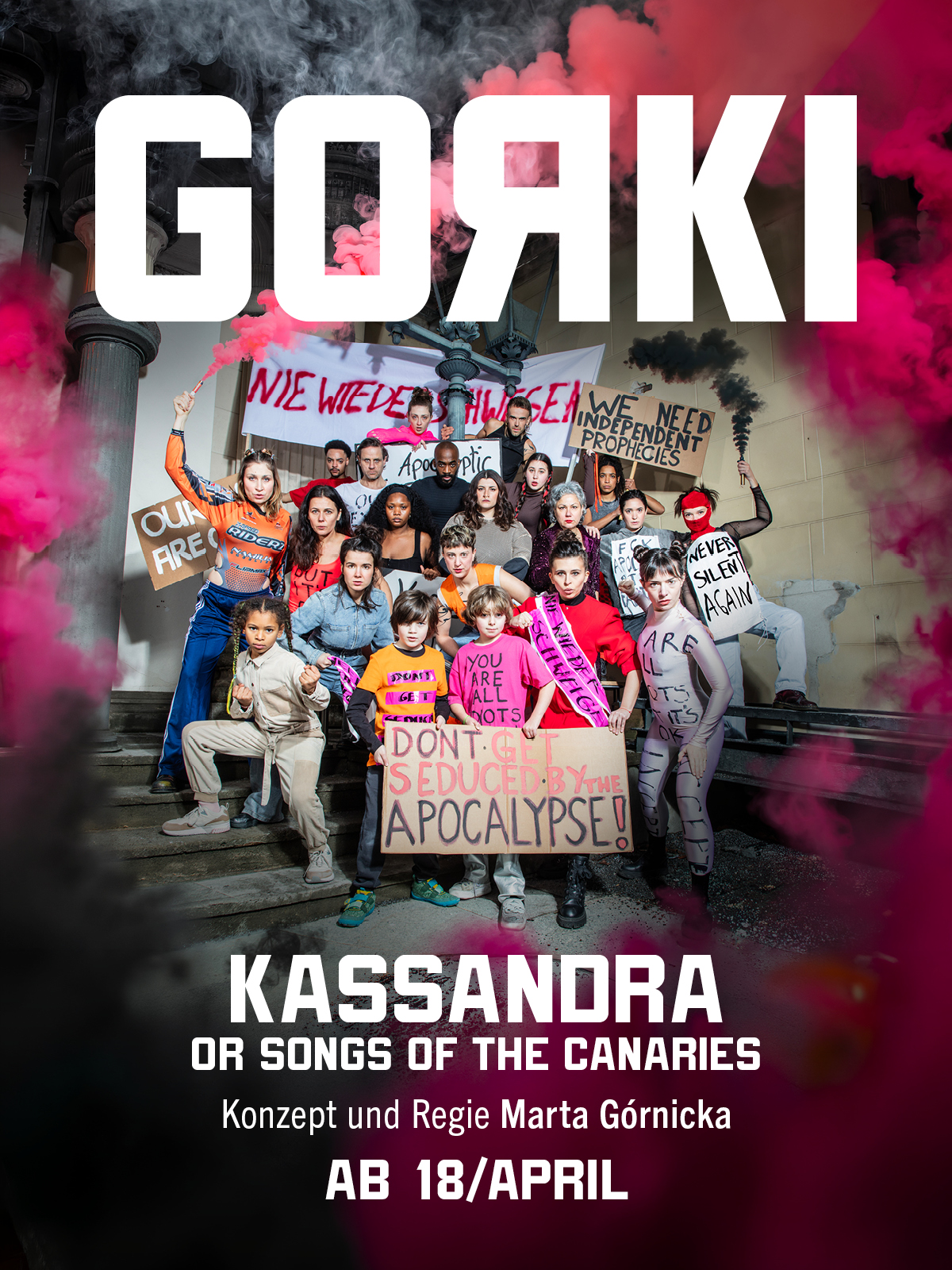
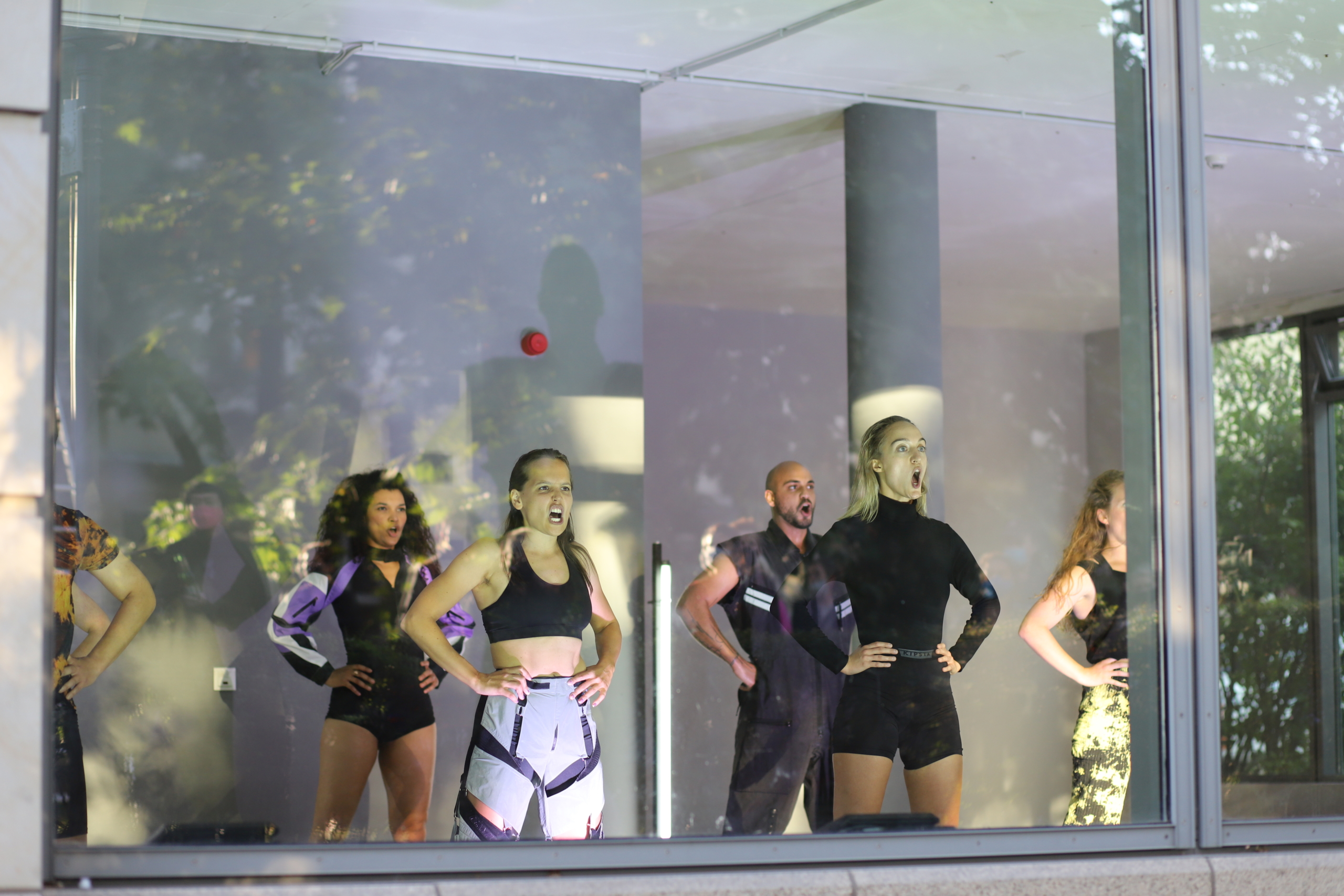
    KASSANDRA 30.05 at Maxim Gorki Theater in Berlin. Forming a chorus of 21 Cassandras these contemporary voices write a revisited, multi-voiced story of Cassandra. Together they examine what we, as a society, tend to remove from our field of vision, what lies ahead of us and before our very eyes, what remains unheard inside of us, what separates us from each other, and what we have in common. And they sing a powerful song.

    “Cassandra syndrome, the experience of having one’s legitimate concerns disbelieved and rejected, leading to psychological distress and suffering, seems to me a shared experience and a condition of our time. Every day, entire communities are confronted with ignorance and silencing. To me, their vulnerable voices are like the song of canaries in a coal mine.

    As long as the canaries continue to sing, we are alive.« – Marta Górnicka

  • KASSANDRA – GREAT REVIEWS AFTER THE PREMIERE IN ALL MAJOR GERMAN NEWSPAPERS

    KASSANDRA – GREAT REVIEWS AFTER THE PREMIERE IN ALL MAJOR GERMAN NEWSPAPERS

    After the premiere of KASSANDRA all the major German newspapers published great reviews: Berliner Zeitung, Berliner Morgenpost, Die Tageszeitung, Die Tagespiegel, as well as Nachtkritik and Teater Der Zeit   


  • Swidish tournée  of „MOTHERS. A SONG FOR WARTIME” / “MÖDRAR. EN SÅNG I KRIGSTIDER”

    Swidish tournée of „MOTHERS. A SONG FOR WARTIME” / “MÖDRAR. EN SÅNG I KRIGSTIDER”

    The MOTHERS began their Swedish tour with 5 performances at the Risk Theatre in Stockholm with standing ovations. The next performances:

    Stockholm: April 23-27
    Norrköping: Maj 4
    Skellefteå: Maj 7
    Göteborg: Maj 9-10

    Reviews:
    “A brutal act of accusation” – Loretto Villalobos,  SVENSKA DAGBLADET 

    “Their song conveys the longing and anger from the darkness of war – with crushing power and beauty.” – DAGENS NYHETER

    “The composition is harsh and beautiful and gets under the skin, past all the dismissed war fatigue.” Amelie Bjorck,AFTONBLADET

    Cruel and beautiful”- KULTURNYHETERNA 

  • KASSANDRA AT MAXIM GORKI THEATER – PERFORMANCES 05.05 and 30.05 at 19.30

    KASSANDRA AT MAXIM GORKI THEATER – PERFORMANCES 05.05 and 30.05 at 19.30

    KASSANDRA –  OR THE SONG OF THE CANARIES 05.05 and 30.05 at Maxim Gorki Theater in Berlin. Forming a chorus of 21 Cassandras these contemporary voices write a revisited, multi-voiced story of Cassandra. Together they examine what we, as a society, tend to remove from our field of vision, what lies ahead of us and before our very eyes, what remains unheard inside of us, what separates us from each other, and what we have in common. And they sing a powerful song.

    “Cassandra syndrome, the experience of having one’s legitimate concerns disbelieved and rejected, leading to psychological distress and suffering, seems to me a shared experience and a condition of our time. Every day, entire communities are confronted with ignorance and silencing. To me, their vulnerable voices are like the song of canaries in a coal mine.

    As long as the canaries continue to sing, we are alive.« – Marta Górnicka

  • KASSANDRA OR THE SONGS OF THE CANARIES WORLD PREMIERE AT MAXIM GORKI THEATER, BERLIN

    KASSANDRA OR THE SONGS OF THE CANARIES WORLD PREMIERE AT MAXIM GORKI THEATER, BERLIN

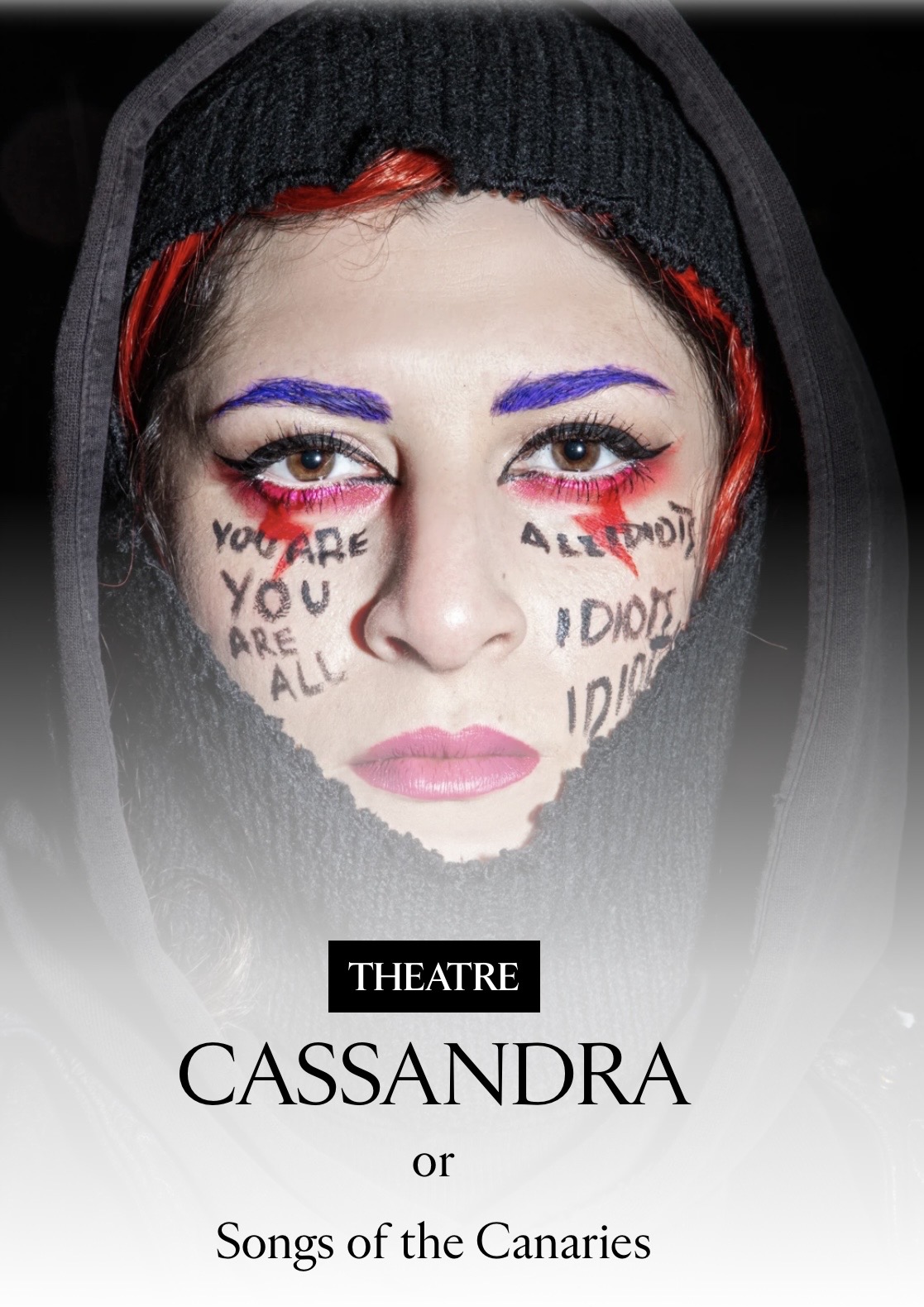
    KASSANDRA –  OR THE SONG OF THE CANARIES the world premiere of Marta’s new performance will take place on 18 April 2026 at Maxim Gorki Theater in Berlin. Forming a chorus of 21 Cassandras these contemporary voices write a revisited, multi-voiced story of Cassandra. Together they examine what we, as a society, tend to remove from our field of vision, what lies ahead of us and before our very eyes, what remains unheard inside of us, what separates us from each other, and what we have in common. And they sing a powerful song.

    “Cassandra syndrome, the experience of having one’s legitimate concerns disbelieved and rejected, leading to psychological distress and suffering, seems to me a shared experience and a condition of our time. Every day, entire communities are confronted with ignorance and silencing. To me, their vulnerable voices are like the song of canaries in a coal mine.

    As long as the canaries continue to sing, we are alive.« – Marta Górnicka

  • KASSANDRA AT FREE REPUBLIC OF VIENNA FESTIVAL 3,4,5 June 2026

    KASSANDRA AT FREE REPUBLIC OF VIENNA FESTIVAL 3,4,5 June 2026

    Unwanted truths and warnings went unheard, but now societies look on in helpless silence at images of arid landscapes, razed cities and the multiple crises of the present. The ancient prophet Cassandra raised her voice against such images of horror and war. It was her fate to foresee disaster but not be heard with her warnings. Who are today’s Cassandras? What answers do the marginalised, vulnerable, often unheard voices in society have for the most urgent questions of our time? What do they demand for the future? Polish director and author Marta Górnicka gained renown with her uniquely powerful chanting choruses. For her most recent work, she brings together a group of people that spans different generations, languages, backgrounds, abilities to make up a chorus of Cassandras: a chorus that speaks the unspeakable.

    »Cassandra syndrome, the experience of having one’s legitimate concerns disbelieved and rejected, leading to psychological distress and suffering, seems to me a shared experience and a condition of our time. Every day, entire communities are confronted with ignorance and silencing. To me, their vulnerable voices are like the song of canaries in a coal mine. With the CASSANDRA CHORUS, I bring these voices to the stage to sing a song of empowerment together. As long as the canaries continue to sing, we are alive.« – Marta Górnicka

  • MOTHERS opens the LESSINGTAGE FESTIVAL IN HAMBURG WITH STANDING OVATIONS

    MOTHERS opens the LESSINGTAGE FESTIVAL IN HAMBURG WITH STANDING OVATIONS

    “Our performance is about women and war.
    About defense mechanisms and responsibility.

    About our reaction to a war in Europe.
    About the rituals of wartime violence against women and civilians
    which are unchanging.”

    Marta Górnicka

    “MOTHERS A SONG FOR WARTIME, orchestrated by director Marta Górnicka, goes beyond the experience of a performance, it is a ceremony uniting the audience in community with suffering Ukraine. […] A powerful moment in the courtyard of honor of the Palace of the Popes.”-  LE MONDE

    This hour is an eternity and overwhelming dread. You have seen and experienced things for which there are no words. About which they speak and sing here together, in a clear and strict form with an attitude that moves and shocks.”- TAGESSPIEGEL

  • Marta Górnicka received the International Theatre Institute Germany Prize 2025 for her Lifetime Achievements

    Marta Górnicka received the International Theatre Institute Germany Prize 2025 for her Lifetime Achievements

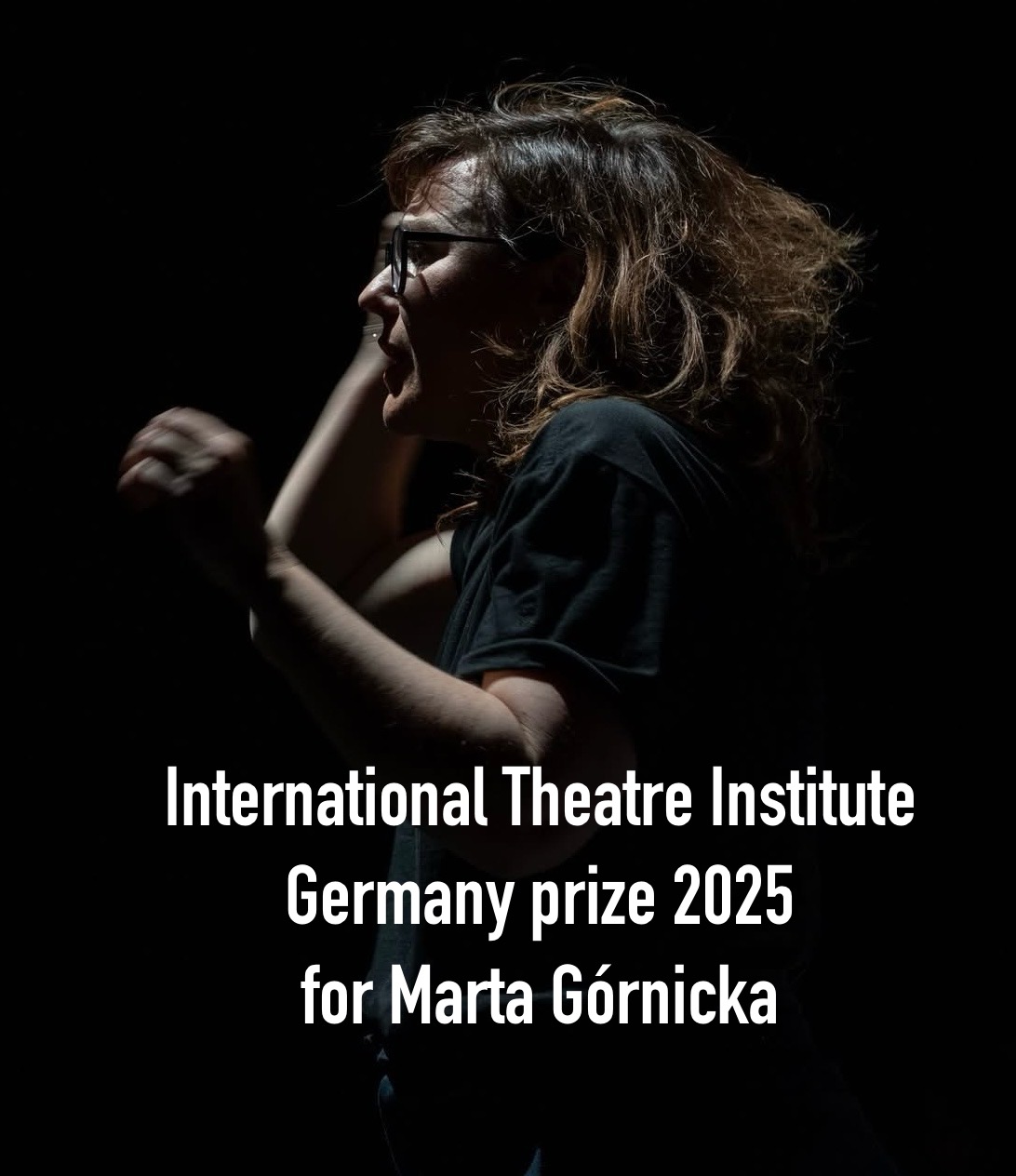
    Marta Górnicka received the International Theatre Institute Germany Prize 2025 for her Lifetime Achievements. The award was presented to the laureate in Theater Heidelberg June 11, and the laudatio was delivered by Professor Ulrike Has. The ITI Germany Prize honours, supports, and highlights the work of theater artists who work across national borders. 

  • MARTA GÓRNICKA WILL RECEIVE ITI PRIZE 2025, JUNE 11 2025 – Theater und Orchester Heidelberg

    MARTA GÓRNICKA WILL RECEIVE ITI PRIZE 2025, JUNE 11 2025 – Theater und Orchester Heidelberg

    With her vision of bringing powerful choruses of women to the stage in connection with often brutal socio-political realities, Marta Górnicka succeeds in placing people at the centre of her productions whose voices are otherwise barely heard.”
    (from the Jury’s statement)
    Join us to honour director #MartaGórnicka with the ITI Prize 2025 🕊
    June 11, 2025
    Theater und Orchester Heidelberg
    6 pm Artist talk: “Political Theatre and Communities of Vulnerability” with Marta Górnicka @marta_gornicka_ and Anna Galas-Kosil @anna.galaskosil
    7.30 pm MOTHERS – A SONG FOR WARTIME – Guest Performance of Marta Górnicka & The Chorus Of Women
    followed by the ITI Prize presentation
    in cooperation with @theater_und_orchester_hd
  • MOTHERS AT MAXIM GORKI THEATER BERLIN ( JUNE 08) AND THEATER UND ORCHESTER HEIDELBERG (JUNE 11)

    MOTHERS AT MAXIM GORKI THEATER BERLIN ( JUNE 08) AND THEATER UND ORCHESTER HEIDELBERG (JUNE 11)

    “With her vision of bringing powerful choruses of women to the stage in connection with often brutal socio-political realities, Marta Górnicka succeeds in placing people at the centre of her productions whose voices are otherwise barely heard.”
    (from the Jury’s statement)
    Join us to honour director #MartaGórnicka with the ITI Prize 2025 🕊
    📅June 11, 2025
    📍 Theater und Orchester Heidelberg
    ⏰ 6 pm Artist talk: “Political Theatre and Communities of Vulnerability” with Marta Górnicka @marta_gornicka_ and Anna Galas-Kosil @anna.galaskosil
    ⏰ 7.30 pm MOTHERS – A SONG FOR WARTIME – Guest Performance of Marta Górnicka & The Chorus Of Women
    followed by the ITI Prize presentation
    in cooperation with @theater_und_orchester_hd
    *DE
    Mit ihrer Vision, kraftvolle Frauenchöre in Verbindung mit oft brutalen sozio-politischen Realitäten auf die Bühne zu bringen, gelingt es Marta Górnicka, Menschen in den Mittelpunkt ihrer Inszenierungen zu stellen, deren Stimmen sonst kaum gehört werden“
    (aus der Begründung der Jury)
    Feiert mit uns die Verleihung des ITI-Preises 2025 an die Regisseurin #MartaGórnicka 🕊.
    📅 11. Juni 2025
    📍 Theater und Orchester Heidelberg
    ⏰ 18 Uhr Gespräch: „Political Theatre and Communities of Vulnerability“ mit Marta Górnicka und Anna Galas-Kosil @anna.galaskosil
    ⏰ 19.30 Uhr MOTHERS – A SONG FOR WARTIME – Gastspiel von Marta Górnicka & The Chorus Of Women
    ✨ ITI-Preisverleihung im Anschluss an die Performance
    in Kooperation mit @theater_und_orchester_hd
    📸 Marta Pruska
  • MASTERCLASS OF MARTA AT ILT FESTIVAL DENMARK, MAY 22

    MASTERCLASS OF MARTA AT ILT FESTIVAL DENMARK, MAY 22

    With her choral theater, Marta Górnicka has found a very unique, powerful theatrical language and at the same time a form on how to express and deal with violence and unbearable realities on stage. Her art form makes it possible to negotiate things for which we lack language and psychological tools.

    In her masterclass Marta Górnicka shares her working practice with the audience and shows how complicated dream work and the overcoming of unreconciled political conflicts can be made conceivable by means of art. How can we work on a fringe of language and voice? What way to build a meeting place of different languages, discourses and voices today ?

    We will look for a place where we are able to find the transformative power of the CHORUS.

    “CHORUS theatre is for me the place where I can meet people, who have no chance to meet each other in other circumstances in reality. And whom politics defines as enemies very often. I see theatre as a new form of solidarity. Place where a better world is imaginable and possible.” (Marta Górnicka for Theatre der Zeit)

  • MARTA GÓRNICKA RECEIVES INTERNATIONAL THEATRE INSTITUTE GERMANY PRIZE 2025

    MARTA GÓRNICKA RECEIVES INTERNATIONAL THEATRE INSTITUTE GERMANY PRIZE 2025

    The International Theatre Institute – German Centre (ITI) is awarding the ITI Germany Prize 2025 to director Marta Górnicka.

    The jury’s decision states:

    ‘With her vision of bringing powerful choruses of women to the stage in conjunction with often brutal socio-political realities, Marta Górnicka succeeds in placing people at the centre of her productions whose voices are otherwise barely heard publicly.’

    Yvonne Büdenhölzer, President of the ITI Germany:

    ‘We are delighted to honour Marta Górnicka with the ITI Germany Prize. In her works, the choir is both a theatrical and a political form. Her choruses are convincing in their precession, nuance and power and open up spaces for reflection and dialogue – often for marginalised perspectives.’

    Marta Górnicka is regarded as the rediscoverer of choral theatre in Europe. Since 2009, she has been working on the constant redefinition of the tragic chorus as a collective mouthpiece for social dialogue. To this end, Górnicka has developed her own method of vocal training. In 2019, she founded the Political Voice Institute in Berlin, a social laboratory of modern choral theatre with an international ensemble.

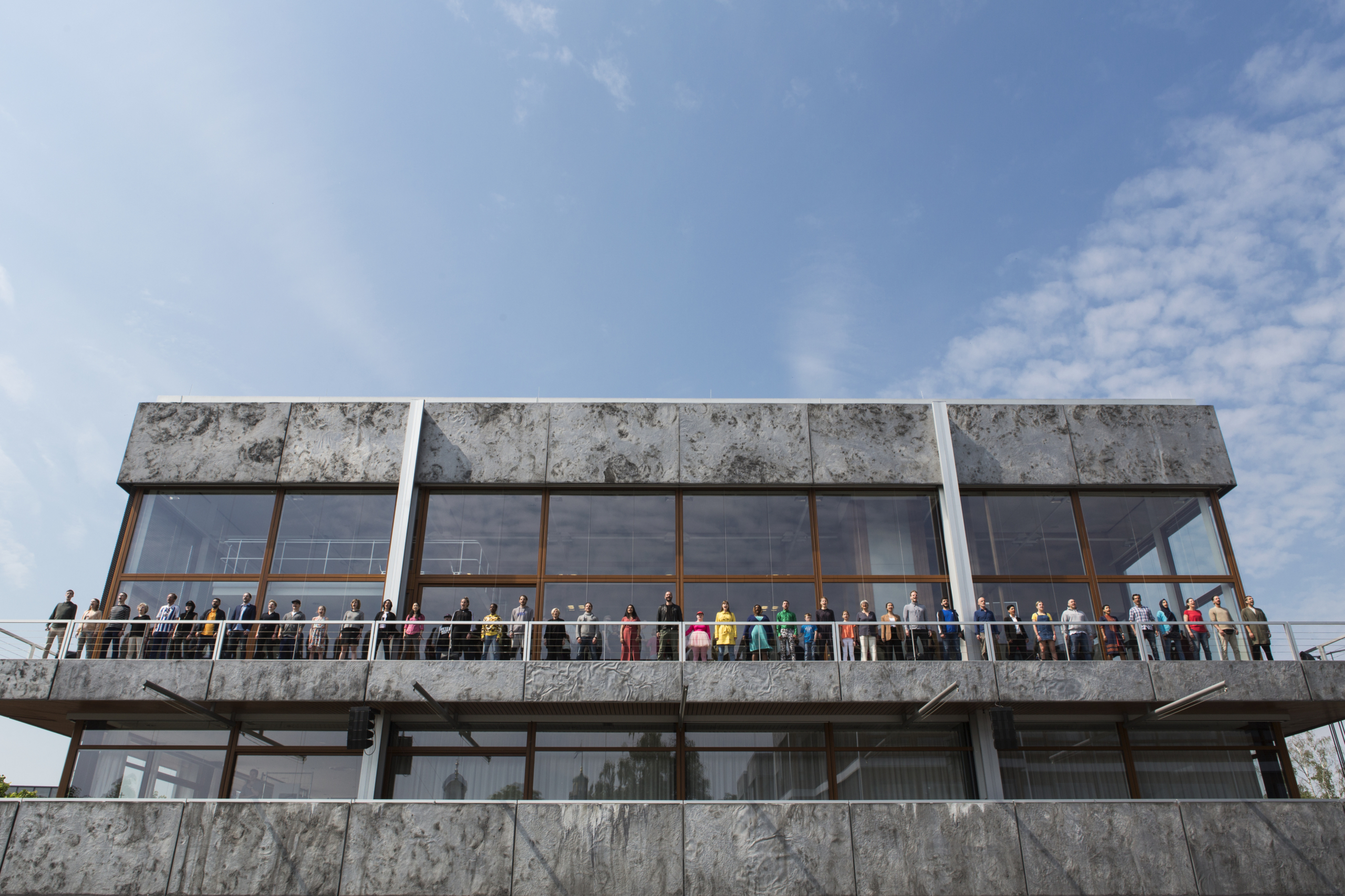
    In her theatre works, the spoken choir itself acts as the sole protagonist, whereby the choral form also serves as a tool for the critical processing of modern mechanisms of power, control, exclusion and violence. Górnicka’s choirs – often women’s choirs – appear as changeable communities that – whispering to shouting – sometimes create militant determination, sometimes doubtful nuances and quiet, gentle moments. With ‘Constitution For The Chorus Of Poles’ (2016), Górnicka brought together over 50 people of different political persuasions in Warsaw for a choral performance in public space. Soon afterwards, she was no longer able to produce her political theatre works in Poland, which was ruled by the extreme right at the time. Berlin became the new centre of her artistic work. Here she created the choral intervention ‘Grundgesetz. Ein Chorischer Stresstest’ (2018/2019), which questioned the German constitution and democracy and was performed in front of the Brandenburg Gate and the Federal Constitutional Court in Karlsruhe.


  • MOTHERS at the international Performing arts Festival in Aarhus, 24.05 2025

    MOTHERS at the international Performing arts Festival in Aarhus, 24.05 2025

    Marta Górnicka’s spectacle “Mothers. A Song for Wartime”, an emotional protest song about civilian participants of wars, will be presented at the International Performing Arts Festival in Aarhus.

    Performance is part of the series Selected Polish Performances at European Theatre Festival.

    Direction: Marta Górnicka

    Cast: Katerina Aleinikova, Svitlana Berestovska, Sasha Cherkas, Palina Dabravolskaja, Katarzyna Jaźnicka, Volha Kalakoltsava, Ewa Konstanciak, Liza Kozlova, Anastasiia Kulinich, Natalia Mazur, Kamila Michalska, Hanna Mykhailova, Valeriia Obodianska, Svitlana Onischak, Yuliia Ridna, Maria Robaszkiewicz, Polina Shkliar, Aleksandra Sroka, Mariia Tabachuk, Kateryna Taran, Bohdana Zazhytska, Elena Zui-Voitekhovskaya.

  • MOTHERS at the Powszechny Theatre, Warsaw, MAY 8 AND 9.2025

    MOTHERS at the Powszechny Theatre, Warsaw, MAY 8 AND 9.2025

    They are survivors. They are refugees from war and persecution, witnesses to violence and destruction. They use the power of their voices to name what cannot be put into words. Their singing becomes an accusation, a plea and a warning to us and to all people in Europe. After a celebrated and shattering performance at the Festival d’Avignon, Marta Górnicka’s choral play can now be seen in Warsaw. “This evening is a choral narrative based on the power of the individual, telling of dark violence and ending with radiant humanity.” Berliner Zeitung

  • ChristophER Schlingensief’s guest professorship at Ruhr University for Marta Górnicka

    ChristophER Schlingensief’s guest professorship at Ruhr University for Marta Górnicka

    Marta Górnicka, theatre director and author holds the position of Christoph Schlingensief guest professorship at the Ruhr University in Bochum in the winter semester 2024/25. This prestigious professorship, established by the Kunststiftung NRW in 2015 for the master’s program in scenic research, is awarded to outstanding artists from around the world working in the field of theater and performance.”Marta Górnicka is internationally celebrated for her theater productions, in which the use of choral forms plays an important role. Her works are as powerful as they are provocative and combine aesthetic radicalism with profound social criticism.”

    “My CHORAL theatre (not unlike the Schlingensief work) is always a direct reaction to what is most DIFFICULT in the socio-political REALITY”.

    Speak greetings
    Martin Paul (Rector of the Ruhr University Bochum)
    Thomas Sternberg (President of the Art Foundation NRW)
    Sven Lindholm (Professor of Scenic Research at the Ruhr University Bochum).
    Dorota Sajewska (Professor at the Institute for Theater Studies at the Ruhr-University Bochum) gives an introduction to Górnicka’s work.

  • ChristophER Schlingensief’s guest professorship at Ruhr University for Marta Górnicka, Nov. 13.2024

    ChristophER Schlingensief’s guest professorship at Ruhr University for Marta Górnicka, Nov. 13.2024

    Marta Górnicka, theatre director and author holds the position of Christoph Schlingensief guest professorship at the Ruhr University in Bochum in the winter semester 2024/25. This prestigious professorship, established by the Kunststiftung NRW in 2015 for the master’s program in scenic research, is awarded to outstanding artists from around the world working in the field of theater and performance.”Marta Górnicka is internationally celebrated for her theater productions, in which the use of choral forms plays an important role. Her works are as powerful as they are provocative and combine aesthetic radicalism with profound social criticism.”

    “My CHORAL theatre (not unlike the Schlingensief work) is always a direct reaction to what is most DIFFICULT in the socio-political REALITY”.

    Speak greetings
    Martin Paul (Rector of the Ruhr University Bochum)
    Thomas Sternberg (President of the Art Foundation NRW)
    Sven Lindholm (Professor of Scenic Research at the Ruhr University Bochum).
    Dorota Sajewska (Professor at the Institute for Theater Studies at the Ruhr-University Bochum) gives an introduction to Górnicka’s work.

  • MOTHERS OPEN EURO- SCENE LEIPZIG FESTIVAL AT Schauspiel Leipzig / Große Bühne, Nov 7. 2024

    MOTHERS OPEN EURO- SCENE LEIPZIG FESTIVAL AT Schauspiel Leipzig / Große Bühne, Nov 7. 2024

    They are 9 to 71 years young. Women from Ukraine, Poland and Belarus. The Ukrainians, as mothers and daughters directly affected by the Russian invasion, fled the war; the Belarusians fled atrocities. The Poles took them into their homes. The 21 women confront violence with plenty of warmth and solidarity, and with that their concentrated collective vocal power. In MOTHERS, they sing under the direction of the Polish director Marta Górnicka in the tradition of the Schtschedrywka. These are folk songs that wish people luck and happiness, here interwoven with chants, that tell of anger, longing and love. Marta Górnicka directs the choir from within the audience and thus creates a lively connection with the singers. Together they dared to step on stage, because they can no longer hide their feelings and want to write their story themselves, instead of living in the knowledge that their part of truth would be suppressed should the war reports once again be written by the victors and men. As singing protagonists, they call out to us not to forget the war unleashed by Russia on Ukrainian soil. So MOTHERS questions Western Europe’s role: Have you really done enough to support Ukraine? The mothers there would more than like to protect their children and dedicate their Schtschedrywka to them, this ancient Ukrainian rite from pre-Christian times, performed by women and children since time immemorial. But how is that supposed to work if sons and also daughters need to go to the front?

  • MOTHERS AT PALAIS DES PAPES AVIGNON FESTIVAL, Photos by Marta Pruska

    MOTHERS AT PALAIS DES PAPES AVIGNON FESTIVAL, Photos by Marta Pruska

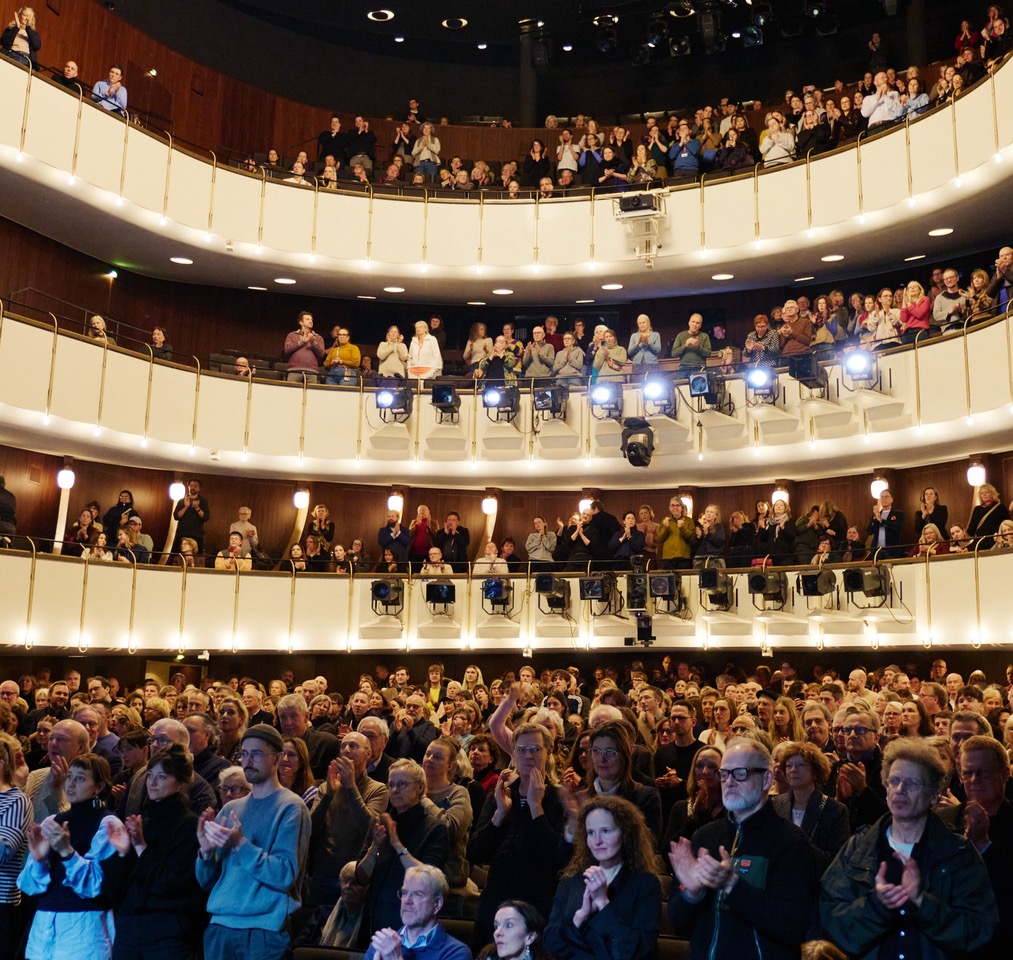
    The audience of the Avignon Festival awarded MOTHERS three times with fifteen-minute standing ovations. According to the Festival organizers, such applause has never happened in the history of the Festival. The show was watched by nearly 9,000 people from all over the world. Reviews of MOTHERS directed by Marta Górnicka have appeared in dozens of magazines, newspapers and websites. Reviews were published in the newspapers Le Monde, Liberation, and many others

    – The MOTHERS conquered the public of the Courtyard of Honor in Avignon who celebrated with a standing ovation lasting a quarter of an hour. The piece at the crossroads of antiquity and a history in progress which, two hours from Paris, threatens Europe.
    Jacky Bornet, FRANCETVINFO.FR

    MOTHERS in Avignon:
    – Marta Górnicka’s anger makes the Court of Honor tremble. Its more than a show, MOTHERS is an act, a strong act, a great gesture that ends in a total communion where love is a feeling that remains legitimate.They glue us to the seat and force us to listen to them and say sorry. Marta Górnicka is the fourth director to enter the Court and the second this year.
    Amélie Blaustein-Nidda, CULT.NEWS.FR

    “MOTHER’S A SONG FOR WARTIME”, orchestrated by director Marta Górnicka, goes beyond the experience of a performance, it is a ceremony uniting the audience in community with suffering Ukraine. (…) A powerful moment in the courtyard of honor of the Palace of the Popes.
    Fabienne Darg, LE MONDE

    This project is co-financed by the Minister of Culture and National Heritage of the Republic of Poland from the Culture Promotion Fund.
    Dofinansowano ze środków Ministra Kultury i Dziedzictwa Narodowego pochodzących z Funduszu Promocji Kultury

  • INTERNATIONAL TOURNÉE OF MOTHERS CONTINUES – PARIS, LYON, Bordeaux ( FRANCE) LEIPZIG, BERLIN ( GERMANY) KATOWICE, WARSZAWA, Kraków ( POLAND)

    INTERNATIONAL TOURNÉE OF MOTHERS CONTINUES – PARIS, LYON, Bordeaux ( FRANCE) LEIPZIG, BERLIN ( GERMANY) KATOWICE, WARSZAWA, Kraków ( POLAND)

    MOTHERS will start autumn tournee very soon. We will visit France, Germany and Poland. Dates you will find below:
    October 5 and 6, 2024 – Teatr Powszechny (Warsaw, Poland), October 9 and 11, 2024 – Théâtre national de Bordeaux en Aquitaine
    (Bordeaux, France),  October 15 and 19, 2024 – Théâtre du Rond-Point (Paris, France), October 24 and 25, 2024 – Festival Sens Interdits (Lyon, France), November 2, 2024 – Maxim Gorki Theater (Berlin, Germany), November 7, 2024 – Euro-Scene Leipzig Theatre Festival (Leipzig, Germany), November 18, 2024 – The National Festival of Directing Art INTERPRETATIONS (Katowice, Poland), November 30 and December 1, 2024 – Teatr Powszechny (Warsaw, Poland), December 6–12, 2024 – International Divine Comedy Theatre Festival (Kraków, Poland)

  • MOTHERS OPENING LA BATIE FESTIVAL AT COMEDIE DE GENEVE, 29-30 August

    MOTHERS OPENING LA BATIE FESTIVAL AT COMEDIE DE GENEVE, 29-30 August

    They are survivors. They are refugees from war and persecution, witnesses to violence and destruction. They use the power of their voices to name what cannot be put into words. Their singing becomes an accusation, a plea and a warning to us and to all people in Europe. After a celebrated and shattering performance at the Festival d’Avignon, Marta Górnicka’s choral play can now be seen in Düsseldorf. “This evening is a choral narrative based on the power of the individual, telling of dark violence and ending with radiant humanity.” Berliner Zeitung

  • AVIGNON FESTIVAL:STANDING OVATIONS FOR MOTHERS!

    AVIGNON FESTIVAL:STANDING OVATIONS FOR MOTHERS!

    “MOTHERS SONG FOR WARTIME” was reworded three standing ovations from the audience nine thousand.
    The anger of Marta Górnicka shooked the walls of Avignon”- wrote Amelie Blausten – Niddam at CULTNEWS.FR. ‘Its more than a show, MOTHERS is an act, a strong act, a great gesture that ends in a total communion where love is a feeling that remains legitimate.
    Marta Górnicka is the fourth director to enter the Court and the second this year.

    Thank you audience of Avignon!

  • MOTHERS AT the courtyard of honor of the Pope’s Palace in Avignon 9,10,11 July

    MOTHERS AT the courtyard of honor of the Pope’s Palace in Avignon 9,10,11 July

    July 9, 10,11 MOTHERS A SONG FOR WARTIME" by Marta Górnicka will be shown in the honorary courtyard of the Papal Palace as part of the Festival d'Avignon

  • MOTHERS OPENING THE SPRING PERFORMING ART FESTIVAL UTRECHT, May 23

    MOTHERS OPENING THE SPRING PERFORMING ART FESTIVAL UTRECHT, May 23

    Marta Górnicka returns to SPRING! She is bringing a choir of 21 women of different ages, backgrounds and professions. In a powerful testimony of the realities of war, each of them tells her own story of how war has changed her life, while collectively they try to find a way to overcome the horror

  • MOTHERS AT PICCOLO TEATRO DI MILANO, May 18-19

    MOTHERS AT PICCOLO TEATRO DI MILANO, May 18-19

    They are survivors. They are refugees from war and persecution, witnesses to violence and destruction. They use the power of their voices to name what cannot be put into words. Their singing becomes an accusation, a plea and a warning to us and to all people in Europe. After a celebrated and shattering performance at the Festival d’Avignon, Marta Górnicka’s choral play can now be seen in Düsseldorf. “This evening is a choral narrative based on the power of the individual, telling of dark violence and ending with radiant humanity.” Berliner Zeitung

  • MOTHERS – THE BEST PERFORMANCE AT the 30th International Festival of Pleasant and Unpleasant Art – ŁÓDŹ

    MOTHERS – THE BEST PERFORMANCE AT the 30th International Festival of Pleasant and Unpleasant Art – ŁÓDŹ

    The audience of the 30th International Festival of Pleasant and Unpleasant Arts, casting their votes (online and traditionally – by filling out plebiscite cards), awarded: The title of the Best Performance to the: “MOTHERS. A SONG FOR THE TIME OF WAR” based on the concept, libretto and directed by Marta Górnicka (co-production of the Women’s Chorus Foundation, Maxim Gorki Theater in Berlin, Powszechny Theater in Warsaw; Festival d’Avignon; Maillon, Théâtre de Strasbourg – Scène européenne; SPRING Performing Arts Festival, Tangente St. Pölten – Festival Für Gegenwartskultur)

  • BERLINER ZEITUNG ABOUT PREMIERE OF MOTHERS IN Maxim Gorki Theater BERLIN

    BERLINER ZEITUNG ABOUT PREMIERE OF MOTHERS IN Maxim Gorki Theater BERLIN

    “Marta Górnicka’s miracle weapon against the war in the Berlin Maxim Gorki Theatre”.

    Marta Górnicka brings a chorus of refugee women to the stage with MOTHERS; human greatness against the brutality of war. This evening is a choral tale from the strength of the individual, which tells of dark violence and ends in bright humanity.«

    Doris Meierhenrich, BERLINER ZEITUNG, 04.11.2023


  • TAGESSPIEGEL ABOUT PREMIERE OF MOTHERS IN Maxim Gorki Theater BERLIN

    TAGESSPIEGEL ABOUT PREMIERE OF MOTHERS IN Maxim Gorki Theater BERLIN

    "The hour is an eternity and overwhelming dread. 
    You have seen and experienced things for which there are no words. 
    About which they speak and sing here, together, in a clear and strict form. 
    With an attitude that moves and shocks."
    

    Rudiger Schaper, TAGESSPIEGEL, 04.11.2023″ School of empathy”


  • GERMAN PREMIERE OF “MOTHERS A SONG FOR WARTIME” AT Maxim Gorki Theater, NOVEMBER 3,4,9 at 19.00

    GERMAN PREMIERE OF “MOTHERS A SONG FOR WARTIME” AT Maxim Gorki Theater, NOVEMBER 3,4,9 at 19.00

    A performance of 21 Ukrainian, Polish, Belarusian mothers and their children.

    The wartime rituals of violence against women are unchanging. War asks Europe the ultimate questions: about responsibility in the face of danger, and about our defense mechanisms. Out of the testimonies of mothers and children—Ukrainians, Belarusians and Poles: those who have fled war; those who have fled persecution; and, finally, those who have welcomed them in Polish homes—Marta Górnicka, director, initiator of the CHORUS OF WOMEN and the founder of the Political Voice Institute at the Maxim Gorki Theater in Berlin, creates a choral performance with her cast.

    The cast comprises 21 Ukrainian, Polish and Belarusian women aged 9 to 72, each with her unique political experience and a different life story; some are survivors from Mariupol, Kyiv, Irpin and Kharkiv. This CHORUS OF MOTHERS FOR WARTIME seeks a new post-operatic choral voice that draws from the female chori of the seventh century BC.

    They mix Ukrainian nursery rhymes, traditional songs, incantations and political statements.

    The performance For Wartime opens with a shchedrivka (Ukr. щедрівка) – a traditional Ukrainian song, a well-wish for happiness and rebirth. These date back to pre-Christian times and are likely thousands of years old. The ritual of singing a shchedrivka was performed by women only, or by women and children. It was always addressed to a particular person. People believed in the power of the song, trusting that its words and the well-wishes would surely come true. Today, these sung wishes are addressed to all people, for a new time; for their entire life.


  • MOTHER A SONG FOR WARTIME- PREMIERE AT Teatr Powszechny, WARSAW, 29.09.2023

    MOTHER A SONG FOR WARTIME- PREMIERE AT Teatr Powszechny, WARSAW, 29.09.2023

    “Our performance is about women and war. About defense mechanisms and responsibility.About our reaction to a war in Europe. About the rituals of wartime violence against women and civilians which are unchanging.”

  • MOTHERS A SONG FOR WARTIME – presentation of the materials from the process of work, Avignon Festival

    MOTHERS A SONG FOR WARTIME – presentation of the materials from the process of work, Avignon Festival

    The war rituals of violence against women never change. War raises questions for Europe: about accountability in the face of a threat and the mechanisms of its defence. Out of the testimonies of Ukrainian, Belarusian, and Polish mothers and children, those who have fled war, those who have fled persecution, and those who welcomed them in Warsaw, Marta Górnicka is creating a choral play. Ukrainian children’s games, lively traditional songs, spells, and political statements all meet each other. The choir starts its wartime song with Schedrivka, a traditional Ukrainian folk song. These melodic well wishes are addressed to all people, for a new time, for a time that we would like to see last a lifetime.Moïra Dalant: Your new project gives women who have been victims of war a space where they can talk.

    reading of the libretto at Avignon Festival 


    “For several months I have been working in a workshop in Warsaw with a group of 21 women affected by the nightmare of the war in Ukraine and the oppression of political persecution in Belarus. And with those who gave them shelter in Warsaw. I also work simultaneously with Ukrainian ethnomusicologists in search of what the war is unable to touch – the tradition of the living voice and Ukrainian singing. The paradox of this war is that thanks to it we penetrate so deeply into the culture of Ukraine.

    The CHORUS is for me and the group of women I work with a tool to look at the defense mechanisms that war activates in us, a tool for recovering memory, but also voice and language. But not the voice of women as victims of war, but on the contrary – as its protagonists.

     The transgenerational ensemble consists of women aged 8 to 71. They come from Kiev, Sum, Irpen, Kharkiv. They are survivors. They are refugees. They are witnesses of violence and bombings.Those who fled with their children to Poland, Warsaw, or other cities in Europe and beyond – want to speak today, use the power of their voice to name what is unnameable.

    One of them, Natalia, brought to Warsaw – only one thing that she wanted to save from the war. Bandura, a traditional Ukrainian instrument that she did not want to leave to the war. This instrument is a symbol of the power of the voice and the power of women. The libretto of MOTHERS and the spectacle for the time of war, which we create together, will begin with a song, which is an old ritual, a song – a wish for prosperity, life and rebirth. It’s about finding together what’s alive in the rubble. In a meeting, in the CHORUS.”


    (Moïra Dalant in conversation with Marta Górnicka, fragment of the interview for Avignon Festival, March- July 2023)
  • MOTHERS
 A SONG FOR WARTIME- reading of a play, JULY 23, AVIGNON FESTIVAL

    MOTHERS
 A SONG FOR WARTIME- reading of a play, JULY 23, AVIGNON FESTIVAL

    The war rituals of violence against women never change. War raises questions for Europe: about accountability in the face of a threat and the mechanisms of its defence. Out of the testimonies of Ukrainian, Belarusian, and Polish mothers and children, those who have fled war and persecution, Marta Górnicka is creating a choral play. Ukrainian children’s games, lively traditional songs, spells, and political statements all meet each other. The Polish director and founder of the Political Voice Institute Berlin (PVI) is this year presenting a reading of the ensemble piece, as well as materials from the rehearsals that have been taking place in Warsaw with refugee women from Mariupol and Kiev. The choir starts its wartime song with Schedrivka, a traditional Ukrainian folk song. These melodic well wishes are addressed to all people, for a new time, for a time that we would like to see last a lifetime.

    With Laure Mathis, Palina Shkliar

    Reading of MOTHERS
A SONG FOR WARTIME

    Cour du musée Calvet, Avignon Festival

    A performance of 21 Ukrainian, Polish, Belarusian mothers and their children. Of different ages and life stories. Refugees from Mariupol, Kyiv, Bucha. Those who have fled the war, and those who have fled persecution – all can find their place in the CHORUS OF MOTHERS. A post-opera, ritual choral form which refers to seventh-century BC female choruses. Premiere: Teatr Powszechny, September 29

    The performance’s main musical theme is the SHCHEDRIVKA/ЩЕДРІВКА – the Ukrainian genre of the ritual New Year’s song. Its history dates back to pre-Christian times and is likely thousands of years long. The ritual of singing shchedrivkaswas usually only performed by women or children. A song was sung for a particular person. It was believed that its words would come true. Therefore, the shchedrivka was a kind of a song-spell. These melodic well wishes are addressed to all people, for a new time, for their whole lives. These are songs for the moment of transition from the old time to the new.

     https://festival-avignon.com/en/edition-2023/programme/reading-of-a-play-mothers-a-song-for-the-wartime-332090#page-content

    Concept, libretto, directing

    Marta Górnicka

    Production

    CHORUS OF WOMEN FOUNDATION, Warsaw

    Cast 

    Lisa Kozłowa

    Svetlana Berestovskaja

    Valeria Obodiańska

    Bohdana Zazhytska

    Swietlana Onischak

    Anastasia Kulinich

    Natalia Mazur

    Julia Rydna

    Sasza Czerkas

    Palina Dobrovolskaja

    Katerina Aleinikova

    Katerina Taran

    Anna Mykhailova

    Aleksandra Sroka

    Katarzyna Jaźnicka

    Ewa Konstanciak

    Elena Zui Voitekhovskaya

    Kamila Michalska

    Maria Robaszkiewicz

    Polina Shkliar

    Daria Novik


    Music

    Wojciech Frycz, Marta Górnicka

    Ukrainian traditional music

    excerpt from Shchedrivka by Mikołaj Leontowicz

    Choreography

    Evelin Facchini

    Costumes for the recording of the rehearsal

    Joanna Załęska


    Dramaturgical cooperation

    Olga Byrska, Maria Yasinska


    Camera operators

    Michał Rumas

    Sebastian Korczak

    Justyna Orłowska


    Film editing

    Michał Rumas

    Color correction

    Michał Rumas

    Sound on the set

    Przemysław Książek, Wojtek Białas

    Sound mix

    Przemysław Książek


    Light

    Michał Jarosz

    Translation to Ukrainian

    Olesya Mamchych

    Translation to English

    Aleksandra Paszkowska

    Translation to French

    Cécile Bocianowski

    Subtitles

    Zofia Szymanowska

    Production

    CHORUS OF WOMEN FOUNDATION, Warsaw

    Coproduction

    Teatr Powszechny (Warsaw)

    Maxim Gorki Theater (Berlin)

    Festival d’Avignon: Fondation Ammodo

    Maillon Théâtre De Strasbourg Scène européenne

    Spring Performing Arts Festival (Utrecht)

    Landestheater Niederosterreich et Tangente St. Pölten

    Festival Für Gegenwartskultur (Austria)

    Project is co-financed by the City of Warsaw 

    Project partners

    Teatr Dramatyczny (Warsaw), Nowy Teatr (Warsaw), Euro Scene Festival Leipzig, Ukrainian Institute, Foundation for Freedom (Warsaw), Independent Non- Profit Public Organisation Focused on Migrants from Ukraine, Chechnya, Belarus, Tajikistan, and Other Countries Who Settled in Warsaw, “Przystanek Świetlica” – Bus Stop: Community Centre, Day Room for Children and Youth of Migrants, Solidary Community Centre “Słonecznik”, Community Centre of Ukrainian Artists in Warsaw, Independent Foundation Platform Kalektar – Kalktar Org, a Research Platform on Belarusian Contemporary Art

    The material was recorded during a rehearsal in Teatr Powszechny, Warsaw, on July 9 2023

  • Marta Górnicka HAS BEEN AWARDED “THE BERTOLT BRECHT VISITING PROFESSORSHIP” AT UNIVERSITY LEIPIZIG

    Marta Górnicka HAS BEEN AWARDED “THE BERTOLT BRECHT VISITING PROFESSORSHIP” AT UNIVERSITY LEIPIZIG

    07.06.2022 Marta Górnicka has been awarded The Bertolt Brecht Visiting Professorship at University Leipzig. Bertolt Brecht Professorship is awarded to the outstanding artists from the fields of theatre, dance, performance and media art. The visiting professors enrich teaching and research at The Institute of Theatre Studies with their international artistic expertise and their unique working methods.

  • BACKSTAGE of “STILL LIFE” AT PICCOLO TEATRO STUDIO MELATO

    BACKSTAGE of “STILL LIFE” AT PICCOLO TEATRO STUDIO MELATO

    Whose life counts as life?Whose life is still a life? Democratic societies are based on the segregation, digital control and exploitation of existences considered superfluous. Every day we are witness of the brutal denial of the status of living entities to successive groups of beings. STILL LIFE is a choral manifesto of re-invented society, a call for a radical new world of relation. The chorus creates a border-crossing song to expose the invisible mechanisms of violence, exclusion and annihilation of life, turning “never again” into “Auschwitz kein Ende”. The chorus operates with techniques of exaggeration, alienation of language, it exists between lip-sync, language, music and silence. Clashing narrations it creates a digital, post-language, post-human song. In the end multiple Dionizos, god of ecstasy and undistractible invite you to a vision of a chorus of all living beings: humans and non-humans, living and dead, voices of people murdered in Auschwitz, rhythms of Namibian tribes, animals and all others…The starting point and metaphor for the performance is the magnificent panorama from the Museum of Naturkunde Berlin, the wall of biodiversity. Life and non-life in the same

  • ITALIAN PREMIERE “STILL LIFE” AT Piccolo Teatro di Milano 26. 05. 2022

    ITALIAN PREMIERE “STILL LIFE” AT Piccolo Teatro di Milano 26. 05. 2022

    26.05.2022 STILL LIFE was presented during International Theatre Festival “Presente Indicativo” at STUDIO MELATO at Piccolo Teatro di Milano. It was Italian premiere of the performance.

    Whose life counts as life?Whose life is still a life? Democratic societies are based on the segregation, digital control and exploitation of existences considered superfluous. Every day we are witness of the brutal denial of the status of living entities to successive groups of beings. STILL LIFE is a choral manifesto of re-invented society, a call for a radical new world of relation. The chorus creates a border-crossing song to expose the invisible mechanisms of violence, exclusion and annihilation of life, turning “never again” into “Auschwitz kein Ende”. The chorus operates with techniques of exaggeration, alienation of language, it exists between lip-sync, language, music and silence. Clashing narrations it creates a digital, post-language, post-human song. In the end multiple Dionizos, god of ecstasy and undistractible invite you to a vision of a chorus of all living beings: humans and non-humans, living and dead, voices of people murdered in Auschwitz, rhythms of Namibian tribes, animals and all others…The starting point and metaphor for the performance is the magnificent panorama from the Museum of Naturkunde Berlin, the wall of biodiversity. Life and non-life in the same time.

  • THEATER DER ZEIT 05/2022 – WHAT SHOULD THEATRE DO NOW?

    THEATER DER ZEIT 05/2022 – WHAT SHOULD THEATRE DO NOW?

    AT THE TIME WHEN UKRAINE CRIES OUT, we need theatre with its power of transformation. The power to remember what is most monstrous. We need practices brought by the CHORUS- community practices, healing. A theatre of new forms of solidarity. And new rituals. (Marta Górnicka for Theater der Zeit)

  • WORKSHOP SESSION OF POLITICAL VOICE INSTITUTE: GUESTS EVELYN FACCHINI AND CEZARY DUCHNOWSKI, APRIL 8-10, MAXIM GORKI THEATRE

    WORKSHOP SESSION OF POLITICAL VOICE INSTITUTE: GUESTS EVELYN FACCHINI AND CEZARY DUCHNOWSKI, APRIL 8-10, MAXIM GORKI THEATRE

    The Political Voice Institute in Maxim Gorki Theatre is a workshop centre for the use of the collective voice/body and language. It is a social laboratory, which seeks to build open, diverse communities and strengthen strategies for resistance to and criticism of violence in social life. It researches and develops practices in the domain of the political character of the voice/body/language. It looks for practical answer to the question: How can the voice be used for freedom?

  • WORKSHOP SESSION OF POLITICAL VOICE INSTITUTE: GUESTS MARTA ZIÓŁEK AND CEZARY DUCHNOWSKI, MARCH 3-5, MAXIM GORKI THEATRE

    WORKSHOP SESSION OF POLITICAL VOICE INSTITUTE: GUESTS MARTA ZIÓŁEK AND CEZARY DUCHNOWSKI, MARCH 3-5, MAXIM GORKI THEATRE

    The Political Voice Institute was launched in September 2019 at the Maxim Gorki Theatre in Berlin as the continuation of an exploration of contemporary chorus theatre of Marta Górnicka. The institute is a workshop centre for the use of the collective voice/body and language. It is a social laboratory, which seeks to build open, diverse communities and strengthen strategies for resistance to and criticism of violence in social life. It researches and develops practices in the domain of the political character of the voice/body/language. It looks for practical answer to the question: How can the voice be used for freedom?

  • Die Gewalt ist das politische Instrument unserer Zeit – interview with Patrick Wildermann, Tagesspiegel 28.09.

    Die Gewalt ist das politische Instrument unserer Zeit – interview with Patrick Wildermann, Tagesspiegel 28.09.

    Patrick Wildermann in conversation with Marta Górnicka, Taggespiegel, 28.09.2021 “We are living in a really explosive moment. Inside the return of fascist fantasies and language. I feel more than ever that we are only separated from horror by a thin wall. Violence is the political instrument of our time.”

  • THE THEATER IS A HOUSE OF HOPE – Arno Widmann in conversation with Marta Górnicka

    THE THEATER IS A HOUSE OF HOPE – Arno Widmann in conversation with Marta Górnicka

    Arno Widmann in conversation with Marta Górnicka about SONG OF ALL BEINGS, RE- INVENTED SOCIETY, a new technic of work with “post-pandemic chorus”, and controversies around Holocaust topic in STILL LIFE. “Now the chorus starts to breathe again but has also stopped speaking in literal sense. It lip-syncs, creates a new form of chorus theatre. It works on the edge of recorded sound, live sound, spoken word, music and silence. As if there is no return to what has been”.

  • THE CHORUS OF THE ALIVE AND DEAD – Marta Górnicka in conversation with ARNO WIDMANN ABOUT PANDEMIC AND NEW PROJECT IN Maxim Gorki Theater: STILL LIFE

    THE CHORUS OF THE ALIVE AND DEAD – Marta Górnicka in conversation with ARNO WIDMANN ABOUT PANDEMIC AND NEW PROJECT IN Maxim Gorki Theater: STILL LIFE

    Marta Górnicka re-invented the chorus theatre in Warsaw Theatre Institute ten years ago as a grand aesthetic and political utopia spanning theatre and society. It’s designed to defy Covid as well. Marta Górnicka is speaking about the CHORUS in the time of pandemic and her new production STILL LIFE.


  • MAGNIFICAT AT International Theatre Festival Santiago A Mil in CHILE, Virtual Presentation January 18-24

    MAGNIFICAT AT International Theatre Festival Santiago A Mil in CHILE, Virtual Presentation January 18-24

    MAGNIFICAT will be presented during the International Theatre Festival Santiago A Mil in CHILE. Virtual presentation will take place January 18-24.2021. MAGNIFICAT confronts the ideological and the esthetic power of the most sacred female image in the Church – the Virgin Mary – through a modern form of choral theater. “The revolutionary Chorus of Women revives the Greek chorus, this time both defending and putting women at its center”.

  • COMMUNITY: AN APP FOR ONE PERSON | THE PERFORMANCE OF POLITICAL VOICE INSTITUTE – OCT 15, 16, 17 in GORKI KIOSK

    COMMUNITY: AN APP FOR ONE PERSON | THE PERFORMANCE OF POLITICAL VOICE INSTITUTE – OCT 15, 16, 17 in GORKI KIOSK

    “In true tragedy, it’s a chorus who dies, not a main character. And this is really tragic. The death of the chorus is the death of a community. App download.”

    Eight performers of the Political Voice Institute will play again the performance COMMUNITY AN APP FOR ONE PERSON at the GORKI KIOSK, giving an insight into working processes of the Political Voice Institute and investigating the (im)possibility of the chorus/community in times of social distancing.

  • MULTITUDE – EXHIBITION IN EBENSPERGER GALLERY|  GALLERY WEEKEND BERLIN 2020

    MULTITUDE – EXHIBITION IN EBENSPERGER GALLERY| GALLERY WEEKEND BERLIN 2020

    “Multitude” at Ebensperger Berlin, is the first monographic exhibition of works by Marta Górnicka, a stage director and the re-discoverer of the choral principle.

  • PREMIERE! COMMUNITY: AN APP FOR ONE PERSON | POLITICAL VOICE INSTUTUTE|Maxim Gorki Theatre

    PREMIERE! COMMUNITY: AN APP FOR ONE PERSON | POLITICAL VOICE INSTUTUTE|Maxim Gorki Theatre

    During the Gallery Weekend Berlin 2020, eight Performers of the Political Voice Institute will do an intervention at the GORKI KIOSK, giving an insight into working processes of the Political Voice Institute and investigating the (im)possibility of the chorus/community in times of social distancing:

  • JEDEM DAS SEINE OPENS 4.BERLINER HERBSTSALON

    JEDEM DAS SEINE OPENS 4.BERLINER HERBSTSALON

    JEDEM DAS SEINE opens 4 BERLINER HERBSTSALON in MAXIM GORKI THEATER

    »Violence accumulates in bodies and it is impossible to erase. It is still in there,« says a ten-year-old girl in the performance. An older woman adds: »Even the victim cannot believe in what happened to her, because it is so unbelievable that she becomes impossible to herself.«

    Nothing demonstrates this better than the history of the exploitation of women through sexual slavery in Nazi Germany, which is still repressed in the collective consciousness. In forced labour camps and concentration camps, sex with prostitutes at camp brothels was the most elaborate form of motivating prisoners to better productivity. This kind of violence was never brought to light, it was never redressed. Women as a cost were forever erased from the collective memory of the Nazi death industry. Has anything changed since the times of Buchenwald?

    Fascisms and nationalisms which are resurrected in Europe and all over the world are instrumentalizing the bodies of women and children again, and using them in a political war.Total supervision over the female body is the foundation of every nationalist populism.

    Since the beginning of capital accumulation, the body of a woman was a brutally colonized resource. Women experienced a stronger alienation from their bodies, from their »work«, than what was ever felt by any workers. The cogs of capitalism and nationalism mesh and clench over the female body. In Jedem das Seine, Górnicka looks at the body as a place where fascism keeps regenerating.

    With: Liliana Barros, Yasin Boynuince, Serena Buchner, Caroline Corves, Leonard Dick, Carmen Engel, Dana Greiner, Marta Górnicka, Maya Haddad, Thekla Hartmann, Antonia Hoffmann, Marion Hollerung, Stacyian Jackson, Gro Swantje Kohlhof, Laura Kupzog, Kim Nguyen, Moritz Ostruschnjak, Gina Penzkofer, Susanne Popp, Melanie Pöschl, Corinna Quaas, Anne Ratte-Polle, Theresa Schlichtherle, Samantha Schote-Ritzinger, Zoë von Weitershausen, Gülbin Ünlü


    Photo: David Baltzer

    In Coproduction with the Münchner Kammerspiele

  • HYMN TO LOVE OPENS CULTURESCAPES FESTIVAL IN THEATER BASEL

    HYMN TO LOVE OPENS CULTURESCAPES FESTIVAL IN THEATER BASEL

    “In der chorischen Inszenierung «Hymne an die Liebe» spiegelt Regisseurin Marta Górnicka die nationalistischen und religiösen Diskurse, die in Polen und in vielen anderen Ländern in den letzten Jahren Aufwind erfahren. Es ist ein Stück über Europa, das die Reihen festigt und schreit: Gebt uns unser Land zurück! Polen schliesst sich eifrig diesem Chor an. Das Bild eines KZ-Orchesters und der Holocaust werden zum Ausgangspunkt einer Auseinandersetzung mit den erstarkenden nationalistischen Tendenzen in Europa und der Flüchtlingskrise. Marta Gornicka demonstriert die brutale Sprache der heutigen Politik, verweist auf die im Internet um sich greifende Sprache des Hasses, zitiert Erklärungen von Politikern sowie Aussagen von Fundamentalisten und Terroristen und konfrontiert sie mit Pop-Songs und patriotischen Liedern. «In Hymne an die Liebe singt ein Chor aus Menschen jeglicher Herkunft für eine Gemeinschaft ohne Ausgrenzung. Präzise und Nuancenreich. Hohe Kunst.» (Tagesspiegel)

    Polnisch mit deutschen und englischen Obertiteln.

    Idee/Text/Regie: Marta Górnicka
    Musik: Teoniki Rożynek
    Choreografie: Anna Godowska
    Dramaturgie: Agata Adamiecka
    Bühnenbild: Robert Rumas
    Kostüme: Anna Maria Karczmarska
    Puppen: Konrad Czarkowski (Kony Puppets)
    Lichtdesign: Artur Sienicki
    Produktionsleitung: Izabela Dobrowolsky, Agnieszka Różyńska
    Musikalische Beratung/Vocal Coach: Joanna Piech-Slawecka

    Mit: Sylwia Achu, Anna Andrzejewska, Maria Chleboś, Konrad Cichoń, Piotr B. Dąbrowski, Tymoteusz Dąbrowski , Maciej Dużyński, Anna Maria Gierczyńska, Paula Głowacka, Maria Haile, Wojciech Jaworski, Borys Jaźnicki, Katarzyna Jaźnicka, Ewa Konstanciak, Irena Lipczyńska, Kamila Michalska, Izabela Ostolska, Filip Piotr Rutkowski, Michał Sierosławski, Ewa Sołtysiak, Kaja Stępkowska, Ewa Szumska, Krystyna Lama Szydłowska, Kornelia Trawkowska, Anastazja Żak

    Eine Produktion von THE CHORUS OF WOMEN Foundation und Teatr Polski w Poznaniu, in Koproduktion mit dem Maxim Gorki Theater und dem Ringlokschuppen Ruhr. Kofinanziert durch die Stadt Warschau, die Stadt Posen und die Kunststiftung NRW. Mit freundlicher Unterstützung des Goethe Instituts München, des Goethe Instituts Warschau und dem Center for Contemporary Art Ujazdowski Castle.

  • HYMN TO LOVE 20. Internationale Schillertage | NTM – Nationaltheater Mannheim 28-29.05.2019

    HYMN TO LOVE 20. Internationale Schillertage | NTM – Nationaltheater Mannheim 28-29.05.2019

    Das spektakuläre Chortheaterstück »Hymne an die Liebe« handelt vom desolaten Zustand Europas. »Gebt uns unser Land zurück!«, wird derzeit geschichtsvergessen in vielen europäischen Ländern geschrien. In ihrem Stück demonstrieren und analysieren Górnicka und der von ihr geleitete Chor die Verrohung von Sprache in unserer Zeit und deren Folgen.

  • Marta Górnicka’s speech at the “DIE VIELEN” DEMONSTRATION, BERLIN

    Marta Górnicka’s speech at the “DIE VIELEN” DEMONSTRATION, BERLIN

    “ON HOW WE CAN USE THE VOICE FOR FREEDOM”- MANIFEST

  • A lecture and artist talk accompanied Marta Górnicka’s production “Magnificat” At SOMMERSZENE: with Agata Łuksza, Julia Ostwald and Silke Bake

    A lecture and artist talk accompanied Marta Górnicka’s production “Magnificat” At SOMMERSZENE: with Agata Łuksza, Julia Ostwald and Silke Bake

    In a lecture and introduction Agata Łuksza and Julia Ostwald accompanied Marta Górnicka’s work by contributions which reflected on the appropriation of movement and the power of feminist choral theatre in contemporary Poland. A talk with the artists and Silke Bake after the performance provided a space for an augmentative discussion.

  • HYMN TO LOVE| INNO ALL’AMORE OPENS MITTELFEST FESTIVAL| Teatro Ristori Cividale del Friuli | Italy

    HYMN TO LOVE| INNO ALL’AMORE OPENS MITTELFEST FESTIVAL| Teatro Ristori Cividale del Friuli | Italy

    The choir is the main character in this extraordinary show. The members of the choir – male and female; young and old; of diverse ethnic backgrounds – sing and act with the greatest intensity, conducted from the audience by Marta Górnicka. They represent a society that can be welcoming or mean; soft or aggressive; impressive or miserable. Górnicka explores the power of the collective and her take on its lowest, pathetic manifestations is uncompromising.

  • HYMN TO LOVE AT at the 10th DIVINE COMEDY International Festival in Krakow, National Stary Theater

    HYMN TO LOVE AT at the 10th DIVINE COMEDY International Festival in Krakow, National Stary Theater

    HYMN TO LOVE won awards for music, choreography, set design and costumes at the 10th DIVINE COMEDY International Festival in Kraków. Marta Górnicka conducts a choir comprised of over twenty people: female and male; dark- and light-skinned; adults, seniors and children. The performance results not only from a rebellion against sexism, racism and intolerance, but also a desire to unpack the myths and beliefs at the core of reactions to the refugee crisis, which often take on monstrous shapes in Poland.